
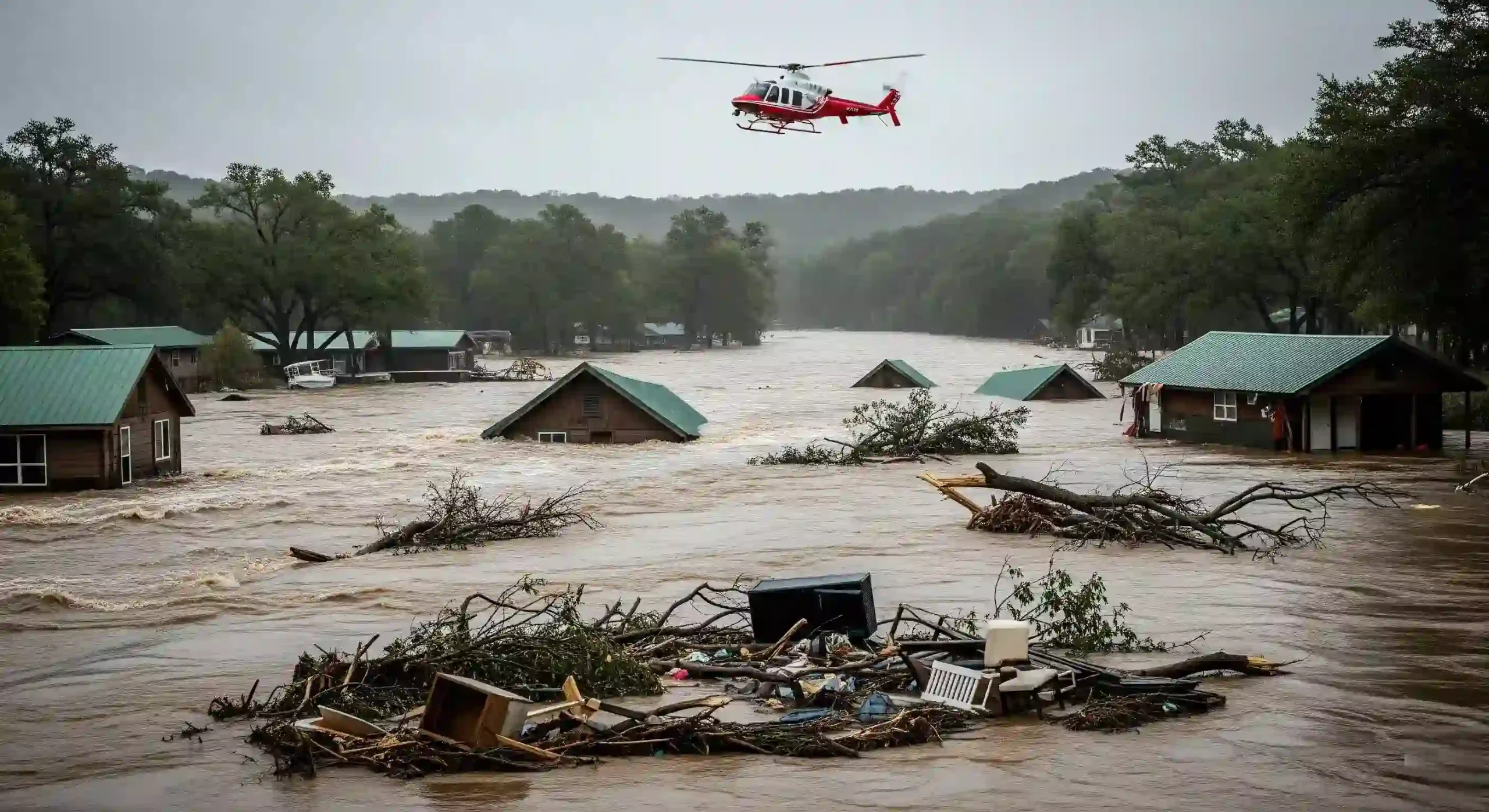
A sudden flash flood has resulted in a tragic loss of life at Camp Mystic in the Texas Hill Country, leaving a community in mourning. While authorities and news outlets are rightly focused on the immediate, heartbreaking aftermath, a critical question demands an answer: why was this flood so devastatingly fast and powerful? While others are reporting the sad news, this article delves into the specific environmental conditions that created this deadly scenario and what it means for outdoor safety in one of America’s most dangerous flood zones.
What Happened: A Timeline of the Tragedy
The situation at Camp Mystic unfolded with terrifying speed late Saturday night. What began as a severe thunderstorm rapidly escalated into a full-blown crisis. According to initial reports from Kerr County officials, intense rainfall, estimated at over 10 inches in less than three hours, overwhelmed the local terrain. The peaceful creeks and low-lying areas around the camp transformed into raging torrents.
An emergency flood response was initiated just before midnight as calls poured in. First responders, including swift-water rescue teams from multiple jurisdictions, arrived to find a scene of chaos, with camp structures damaged and access roads washed out. As of Monday morning, authorities have tragically confirmed four fatalities and are continuing a search for one missing individual.
Why Here? Unpacking the “Flash Flood Alley” Danger
To understand this tragedy, one must understand the region’s geography. The Texas Hill Country is the heart of what meteorologists call “Flash Flood Alley,” one of the most flood-prone areas in North America. The stunning landscape of rolling hills and limestone cliffs holds a hidden danger.
The unique Texas hill country weather patterns can produce massive amounts of rain in a short time. Unlike flatter areas with absorbent soil, the Hill Country is characterized by thin topsoil over non-porous limestone. When torrential rain falls, the water cannot soak into the ground. Instead, it runs off the steep terrain almost immediately, funneling into narrow canyons and riverbeds with incredible force and speed. This is the precise mechanism that creates a “flash” flood—it’s not a gradual rise, but a sudden wall of water.
A Deeper Look: The Guadalupe River’s Role
The iconic Guadalupe River, a hub for summer recreation, snakes through this region and played a significant role in the disaster. While the camp was not directly on the main river, the smaller tributaries that feed it became the primary conduits for the floodwaters.
Decades of development and a history of intense storms have shaped the behavior of this watershed. When the ground is saturated from previous rainfall, as it was this past week, even a moderate storm can trigger significant Guadalupe River flooding and its tributaries. The runoff from the surrounding hills poured into these channels, creating a catastrophic surge that swept through the camp with little warning.
Summer Camp Safety: Critical Lessons from This Disaster
This event is a devastating reminder of the importance of preparedness. For parents sending their children to camps and for the organizers who care for them, especially in flood-prone regions, understanding the risk is paramount. The key to summer camp safety in Flash Flood Alley is constant vigilance and a robust emergency plan.
- Monitor Weather Proactively: Standard weather apps are not enough. Camp officials should use advanced alerts from the National Weather Service (NWS) and have a dedicated weather radio that functions without power or cell service.
- Know Your Evacuation Routes: Camps must have clearly defined, high-ground evacuation routes. These routes should be practiced by staff and campers, just like fire drills.
- Understand the Warnings: A “Flood Watch” means be prepared. A “Flood Warning” means flooding is imminent or occurring. This distinction can be the difference between life and death. Immediate action to get to higher ground is necessary.
Looking Ahead: The Community and The Aftermath
As the search and recovery efforts continue, the community of Hunt and the greater Texas Hill Country are wrapped in grief. The investigation into the specific timeline and response will unfold in the coming days.
For the rest of the country, this tragedy must serve as a stark and urgent lesson. The beauty of our natural landscapes often conceals immense power. Understanding and respecting that power by preparing for the worst-case scenario is not just a recommendation; it is an absolute necessity. Reinforcing the key takeaway: understanding the environmental risks is the first step toward preventing future tragedies.
Find daily trending topics and trending news of USA at Usahottopics.com.
Resource Links (for fact-checking):
- USA Hot Topics: https://www.usahottopics.com
- National Weather Service: https://www.weather.gov
- Texas Division of Emergency Management: https://tdem.texas.gov
- United States Geological Survey (USGS) – Water Resources: https://www.usgs.gov/mission-areas/water-resources