
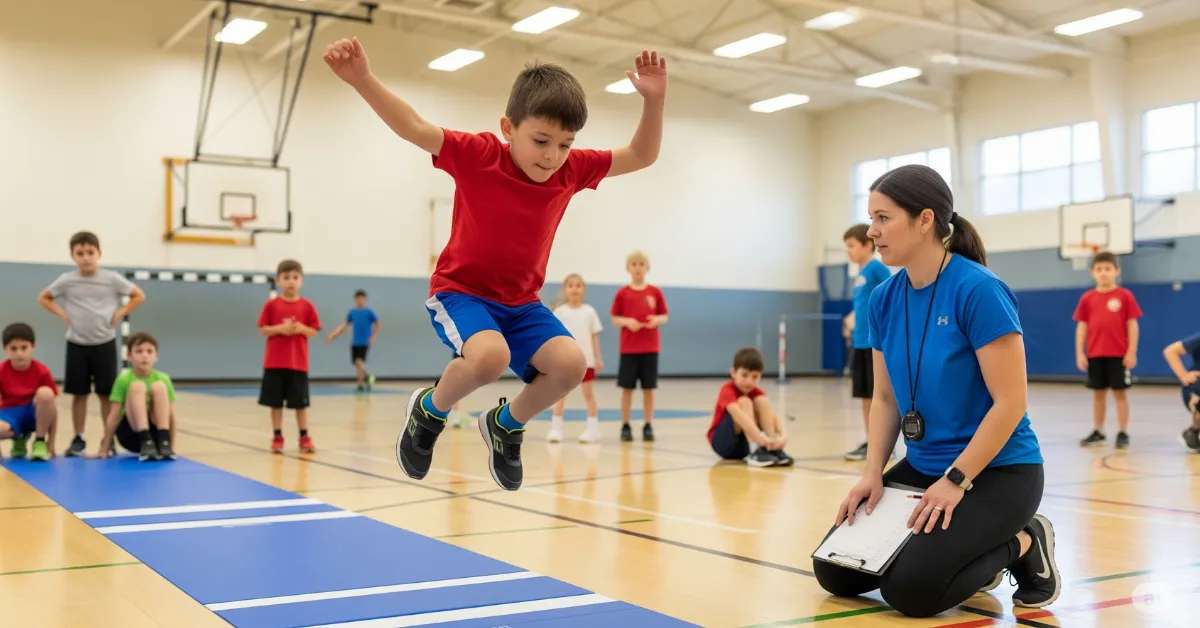
President Donald Trump has officially signed an executive order to revive the Presidential Fitness Test, a program that was once a staple in American schools for decades. The move, part of a “Make America Fit Again” initiative, signals a return to a more performance-based approach to youth physical education.
While political headlines and historical context dominate the news, many parents are left with a more immediate question: what does this mean for my child? This article moves beyond the news cycle to provide a practical guide for parents and students on what to expect, what the test will entail, and how you can prepare to set your child up for success.
The New Old Standard: What the Test Will Include
The revived test is expected to largely mirror the original program, which was a series of physical challenges designed to measure key components of physical fitness. Based on historical standards and recent announcements, students will likely be evaluated on:
- Aerobic Endurance: The one-mile run or walk.
- Muscular Strength & Endurance: A series of push-ups, modified push-ups, or pull-ups.
- Core Strength & Endurance: Curl-ups or sit-ups.
- Flexibility: The sit-and-reach test.
Unlike the Obama-era program that focused on individual improvement, this new iteration will likely return to a percentile-based system. Students who achieve top scores (historically the 85th percentile and above) will once again be eligible for the Presidential Physical Fitness Award, a coveted achievement for many in generations past.
A Parent’s Guide to the New PE: Preparing Your Child
This isn’t about creating future Olympians, but rather about promoting consistent activity and a healthy lifestyle. Parents can play a crucial role in helping their children feel confident and prepared. Here are some actionable steps you can take at home:
- Build a Routine: Incorporate short, fun workouts into your family’s weekly schedule. A simple 15-minute run, a game of tag, or even just stretching together can make a huge difference in building stamina and flexibility.
- Practice the Fundamentals: Help your child practice the specific exercises in the test. Focus on proper form for push-ups and sit-ups to prevent injury and ensure they get a good workout. A sit-and-reach test can be practiced easily with a ruler or measuring tape.
- Set Realistic Goals: Focus on personal improvement rather than competitive scores. Encourage your child to beat their own “personal best” to build self-esteem and a love for physical activity, not a fear of failure.
- Prioritize a Healthy Lifestyle: A balanced diet and adequate sleep are just as important as the physical training. Good nutrition and rest will directly impact performance and overall wellness.
Beyond the Test: The Debate Over Youth Fitness and Health
The return of the Presidential Fitness Test comes at a critical time. Data from the Centers for Disease Control and Prevention indicates that nearly one in five children and adolescents in the United States are affected by obesity, a rate that has tripled since the 1970s. The administration points to these statistics as a core reason for the test’s revival.
However, the debate surrounding standardized physical tests is complex. Critics argue that a rigid, performance-based test can create anxiety and feelings of inadequacy, particularly for students who struggle with physical activity. On the other hand, proponents argue that such a test sets a clear standard for excellence and provides a necessary benchmark for a nation facing a youth health crisis. The challenge for educators and the newly reinstated President’s Council on Sports, Fitness, and Nutrition will be to implement the test in a way that motivates and empowers all students, not just the naturally athletic.
What’s Next? The Future of the President’s Council
Trump’s executive order also revitalizes the President’s Council, now stacked with notable professional athletes and figures from the sports world. This council is tasked with not only shaping the criteria for the new test and awards but also creating broader school-based programs to reward excellence in physical education. Their mandate is to develop modern guidelines that align with current fitness standards while restoring the sense of pride and accomplishment that the original test provided.
The full details of the program will be rolled out in the coming months. In the meantime, focusing on a healthy, active lifestyle at home remains the best way to ensure your child is ready for this new chapter in American physical education.
find daily trending topics and trending news of USA at Usahottopics.com: https://www.usahottopics.com
Resources:
Childhood Obesity Statistics: https://stateofchildhoodobesity.org/demographic-data/ages-6-17/
History of the Presidential Fitness Test: https://www.mentalfloss.com/posts/presidential-fitness-test-origins-history
The President’s Council on Sports, Fitness & Nutrition: https://odphp.health.gov/pcsfn
Tips for Preparing Children for a Fitness Test: https://www.niddk.nih.gov/health-information/weight-management/healthy-eating-physical-activity-for-life/helping-your-child-tips-for-parents