
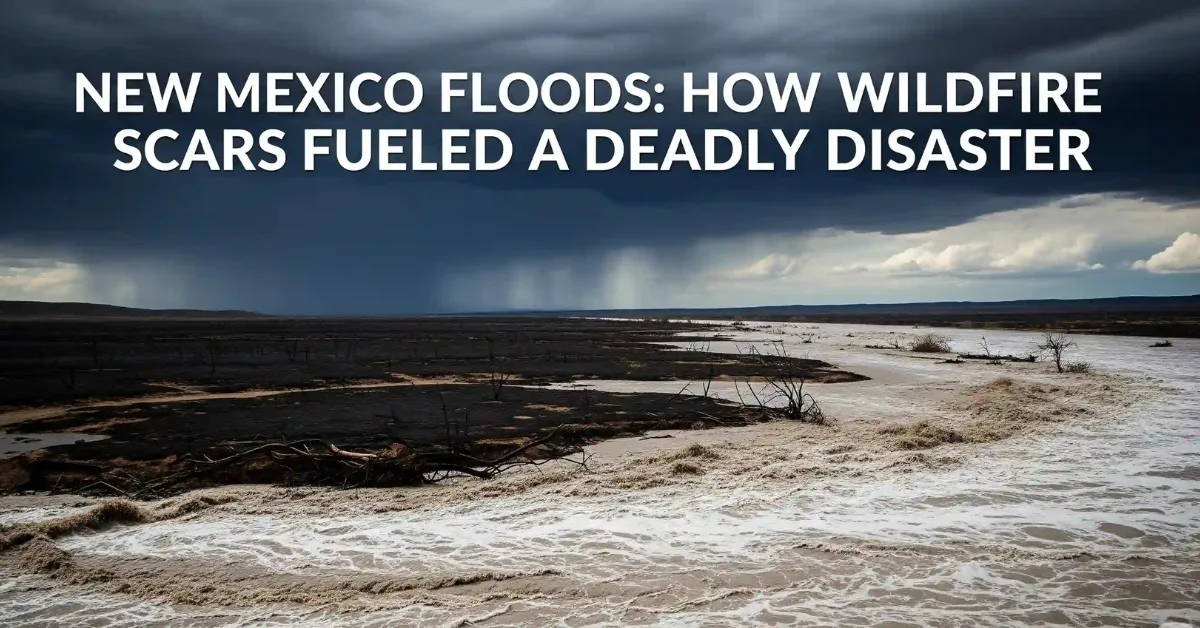
Catastrophic flash flooding has devastated the mountain village of Ruidoso, New Mexico, leading to multiple deaths, daring swift-water rescues, and a declared state of emergency after the Rio Ruidoso surged to historic, destructive heights. The shocking event has left the community reeling, with dramatic videos showing entire homes being swept away by the torrent.
While heavy monsoon rains were the immediate trigger for this tragedy, the true story of why this flood was so powerful and deadly lies etched into the landscape itself. This article explains the critical factor that turned a powerful storm into a deadly catastrophe: the burn scars left behind by recent, devastating wildfires.
What Happened in Ruidoso: A Timeline of the Disaster
The crisis unfolded rapidly as intense monsoon rains hammered the mountains surrounding Ruidoso. This deluge of water funneled into the Rio Ruidoso, which flows through the heart of the village, causing it to swell into a raging, debris-filled torrent. The National Weather Service issued a rare flash flood emergency, urging residents in low-lying areas to evacuate immediately.
The human toll has been heartbreaking. Officials have confirmed multiple fatalities, and emergency crews performed dozens of harrowing rescues, pulling people from homes and vehicles suddenly inundated by the floodwaters. The event has left a wide path of destruction, destroying property, washing out roads, and cutting off access to parts of the community, prompting a massive emergency response.
The Science of a Burn Scar Flood
To understand the severity of the Ruidoso flooding, one must first understand the lingering impact of fire. A burn scar is the area left behind after a high-intensity wildfire. The extreme heat from such a blaze can bake the top layer of soil, creating a “hydrophobic,” or water-repellent, surface.
Think of it like rain falling on pavement instead of a sponge. Healthy forest soil and vegetation absorb a significant amount of rainwater, slowing it down and releasing it gradually. However, on a burn scar, the water cannot soak in. Instead, it runs off immediately, gathering speed as it flows downhill. This runoff collects loose ash, soil, and charred debris, creating a thick, fast-moving slurry that has far more destructive power than water alone. This phenomenon is a critical element of post-wildfire risk.
A “Double Disaster”: From Fire to Flood
The community of Ruidoso is tragically familiar with natural disasters. This flood comes on the heels of major wildfires that ravaged the area, forcing evacuations and destroying hundreds of homes. Residents were just beginning the arduous process of wildfire recovery when they were faced with this second, related catastrophe.
This “fire-flood” cycle is a terrifying reality and a growing concern for communities across the Western United States. As climate change contributes to more frequent and intense wildfires, the subsequent risk of burn scar flooding increases dramatically. The Ruidoso tragedy serves as a stark and painful reminder of how one natural disaster can create the conditions for the next, compounding the danger and the difficulty of recovery.
What’s Next for Ruidoso and How to Stay Safe
The immediate focus in Ruidoso remains on search and rescue operations and assessing the full scope of the damage. In the coming weeks and months, the community will face the immense challenge of cleaning up and rebuilding.
This event is also a critical warning for the millions of Americans living in or near wildfire-prone areas. It is essential to understand that your risk doesn’t end when the smoke clears. Residents in these zones must remain hyper-vigilant during rainy seasons, have an evacuation plan ready, and heed all warnings from emergency officials. As the tragic events in New Mexico have shown, even a moderate amount of rain can be life-threatening in the shadow of a burn scar.
Find daily trending topics and trending news of USA at www.usahottopics.com.
Resource Links (for fact-checking):
- National Weather Service (NWS) Albuquerque
- New Mexico Department of Homeland Security & Emergency Management