
Introduction:
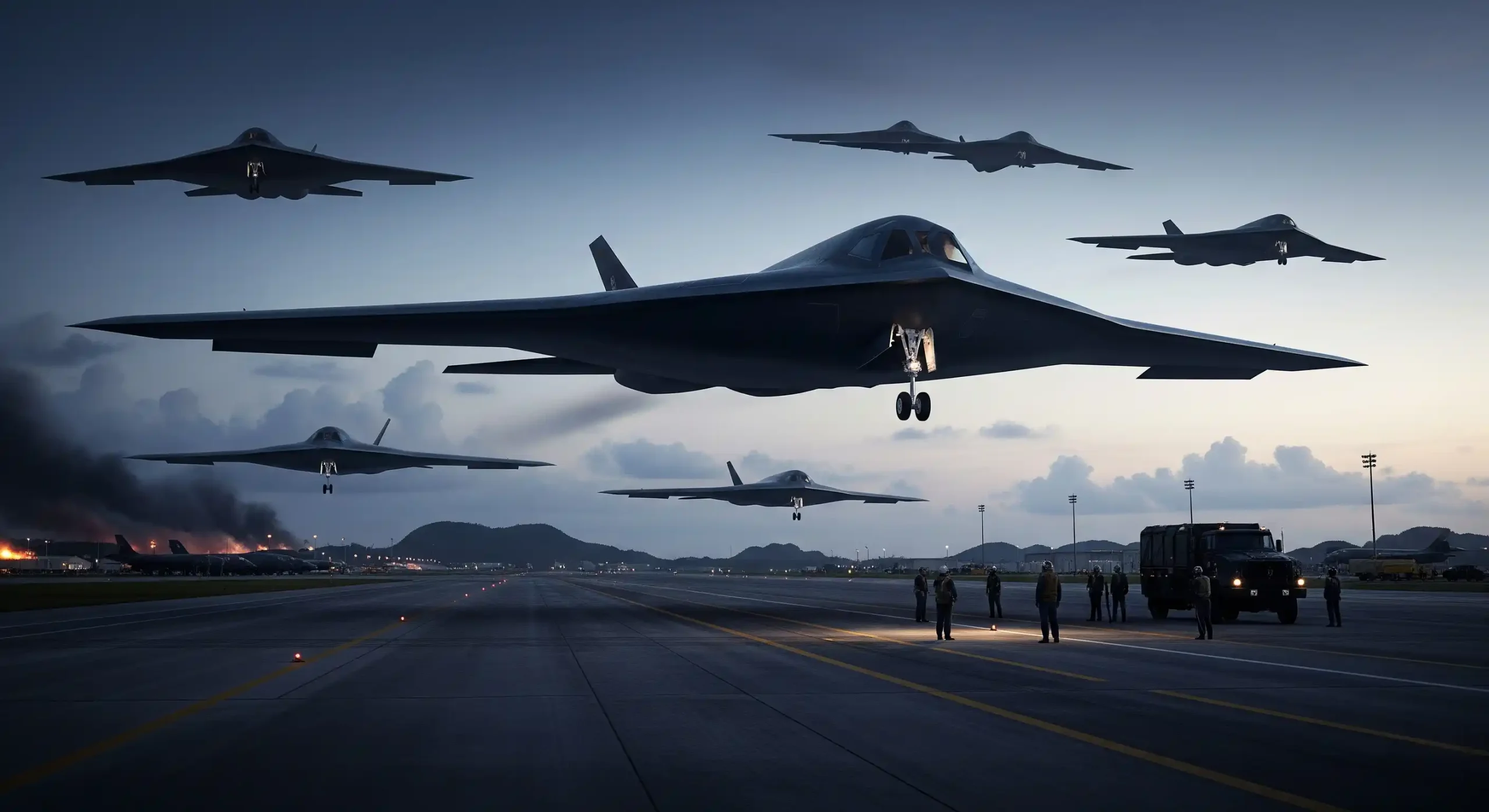
Breaking news has confirmed the recent arrival of B-2 stealth bombers at Guam’s Andersen Air Force Base. This significant movement comes amidst heightened international tensions, particularly concerning the escalating conflict between Israel and Iran. This article aims to delve beyond the immediate headlines, exploring why Guam remains an indispensable cornerstone of US military strategy, what this latest deployment signals for America’s readiness and power projection in the Pacific, and its broader geopolitical implications for global security.
Guam’s Enduring Strategic Value: More Than Just a Pacific Outpost
Guam, as the westernmost US territory, holds a geographical advantage that makes it profoundly strategic. Situated approximately 1,600 miles southeast of Taiwan and 250 miles from mainland China, it offers a crucial forward staging point for rapid response across the vast Indo-Pacific. At its heart lies Andersen Air Force Base, a critical hub for US Indo-Pacific Command operations. With its extensive runways and logistical infrastructure, Andersen is uniquely capable of hosting and sustaining heavy strategic bombers, facilitating global power projection with remarkable speed. Complementing this aerial might is Apra Harbor Naval Base, a naturally protected, deep-water harbor. Apra Harbor can berth aircraft carriers and nuclear submarines, providing essential support and sustainment for naval forces. This dual capability—aerial and maritime—cements Guam’s indispensable role as a robust platform for military operations and force projection in the world’s most dynamic strategic theater.
The B-2 Spirit Deployment: Unpacking Its Role and Capabilities
The deployment of the B-2 Spirit stealth bomber is a clear signal of serious intent. Known for its distinctive flying wing design and radar-absorbing materials, the B-2 is designed to evade detection and penetrate sophisticated enemy air defenses. Its impressive unrefueled range of over 6,000 nautical miles, extendable to 10,000 miles with aerial refueling, allows it to strike targets anywhere in the world. Crucially, the B-2 possesses the unique capacity to carry powerful munitions such as the 30,000-pound GBU-57 Massive Ordnance Penetrator (MOP). Often referred to as the “bunker buster” bomb, the MOP is specifically engineered to neutralize deeply buried, hardened targets, including fortified underground facilities. The presence of these bombers in Guam directly enhances US power projection and deterrence capabilities across various theaters, including potential scenarios in the Middle East and the broader Indo-Pacific, underscoring the seriousness with which the US views current global tensions.
Beyond the Headlines: Guam’s Role in Future US Defense
This recent B-2 deployment, along with other high-profile military movements, highlights Guam’s growing importance as a resilient forward operating base in US defense planning. In an era of increased strategic competition, particularly with China, the US is making significant investments in the island’s military infrastructure. A major focus is the development of an enhanced integrated air and missile defense system. The overarching goal is to transform Guam into the strongest air and missile defense hub in the Western Pacific by around 2035. This comprehensive system integrates advanced technologies such as the Terminal High Altitude Area Defense (THAAD), Indirect Fire Protection Capability (IFPC), and ground-based Aegis Ballistic Missile Defense. These layered defenses are designed to protect critical assets from a range of threats, including ballistic missiles, cruise missiles, and unmanned aerial systems. While these developments bolster US national security and regional stability, they also raise complex questions regarding their environmental and social impact on the indigenous Chamorro population, a topic of ongoing dialogue.
Geopolitical Implications: What Guam’s Activity Signals Globally
The heightened military activity in Guam, particularly the deployment of B-2 bombers, sends a powerful message across the global geopolitical landscape. While immediately relevant to the Israel-Iran conflict, this move also serves as a broader signal to other potential adversaries and allies in the Indo-Pacific. It underscores the US commitment to maintaining a robust military presence in the region, capable of deterring aggression and responding rapidly to crises. By leveraging Guam’s strategic position, the US aims to project strength, reassure allies (like Japan and South Korea), and maintain a flexible and rapid response capability to global crises, thereby reinforcing the concept of a free and open Indo-Pacific. Guam’s continuous evolution as a vital and adaptable nexus in US military strategy, constantly adjusting to a dynamic and challenging global security landscape.
Resource Links (for fact check):
- B-2 bombers moving to Guam amid Middle East tensions, US officials say – The Economic Times: https://m.economictimes.com/news/defence/b-2-bombers-moving-to-guam-amid-middle-east-tensions-us-officials-say/articleshow/121996375.cms
- US moves B-2 stealth bombers to Guam amid escalating Israel-Iran conflict: Report – India Today: https://www.indiatoday.in/world/story/us-moves-b2-stealth-bombers-to-guam-amid-escalating-israel-iran-conflict-report-2744327-2025-06-21
- Missile Defense: DOD Faces Support Challenges for Defense of Guam | U.S. GAO: https://www.gao.gov/products/gao-25-108187
- Shielding the Pacific: Inside the Guam Defense System Joint Program Office – Army.mil: https://www.army.mil/article/286099/shielding_the_pacific_inside_the_guam_defense_system_joint_program_office