
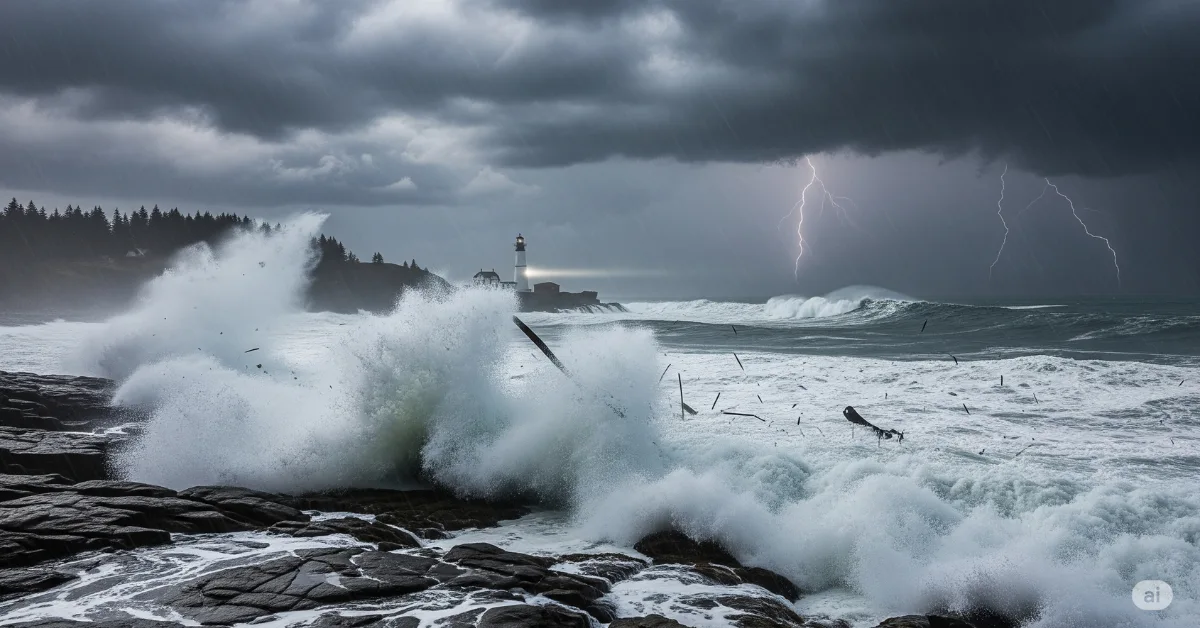
Tropical Storm Dexter is the fourth named storm of the 2025 Atlantic hurricane season, and while the latest forecasts from the National Hurricane Center show a track that will keep the storm from making landfall in the United States, its presence is creating a serious, often overlooked danger for millions of coastal residents and vacationers. Even as Dexter moves away from the U.S., its powerful wind field is churning up the Atlantic, leading to dangerous rip currents and rough surf from Florida all the way to Massachusetts. This is the hidden danger of a distant storm, and understanding it is critical for anyone planning to be near East Coast beaches this week.
Why a Distant Storm is Still a Threat to Beaches
Many people believe that if a tropical storm isn’t going to make landfall, there’s no cause for concern. However, the weather system’s impact can extend far beyond its immediate location. Tropical Storm Dexter’s strong winds are generating powerful swells that travel great distances across the ocean. When these swells reach the shoreline, they can create dangerous rip currents, which are narrow channels of fast-moving water flowing away from the beach and out to sea.
These currents are the leading cause of hurricane-related fatalities in the U.S., even when the storm is hundreds of miles away. They can form suddenly and are strong enough to sweep even the most experienced swimmers out into deep water. Beachgoers need to be aware that even on a sunny day with clear skies, a distant storm can make the water unsafe.
State-by-State: A Guide to the Latest Coastal Warnings
The risk of dangerous rip currents is not uniform along the entire coast. Specific warnings and precautions are in place for different regions.
- Mid-Atlantic (Delmarva, Virginia, North Carolina, South Carolina): This region is facing a particularly high risk of rip currents. Beaches along the Outer Banks, in particular, are seeing double red flags, indicating that ocean swimming is banned due to the life-threatening conditions. Rough surf and powerful shorebreaks are also a concern, capable of injuring swimmers.
- Northeast (New Jersey, New York, New England): A moderate rip current risk is in effect for many of these beaches. Swimmers are advised to stay in shallow water and be cautious of waves that could knock them off their feet.
- Southeast (Georgia, Florida): While the threat is lower than in the Mid-Atlantic, a moderate rip current risk still exists. Visitors should remain vigilant and pay close attention to local beach warning systems.
Staying Safe: Essential Tips for the Surf and Sand
Heeding official warnings is the most important step for beach safety. Always check with local authorities, like lifeguards, and look for beach flags, which provide a quick visual cue about the day’s conditions.
If you find yourself caught in a rip current, remember these crucial tips:
- Stay calm and don’t fight the current. Swimming directly against a rip current will only exhaust you.
- Swim parallel to the shore. Rip currents are narrow. Swimming sideways will allow you to escape the current’s pull.
- Once out of the current, swim diagonally toward the beach.
This is a critical reminder that the impact of a tropical storm can be widespread and that vigilance is required even when the sun is shining.
What’s Next for Dexter and the 2025 Hurricane Season
As Tropical Storm Dexter continues to move northeast and away from the United States, it is expected to weaken and become a post-tropical system by midweek. While Dexter’s direct threat diminishes, the National Hurricane Center is monitoring other systems in the Atlantic. This is a sign that the 2025 Atlantic hurricane season, which has been forecasted to be above-average, is picking up momentum as it approaches its peak in August and September.
find daily trending topics and trending news of USA at https://usahottopics.com
Resource Links:
- National Hurricane Center: https://www.nhc.noaa.gov
- FOX Weather: https://www.foxweather.com
- AccuWeather: https://www.accuweather.com