
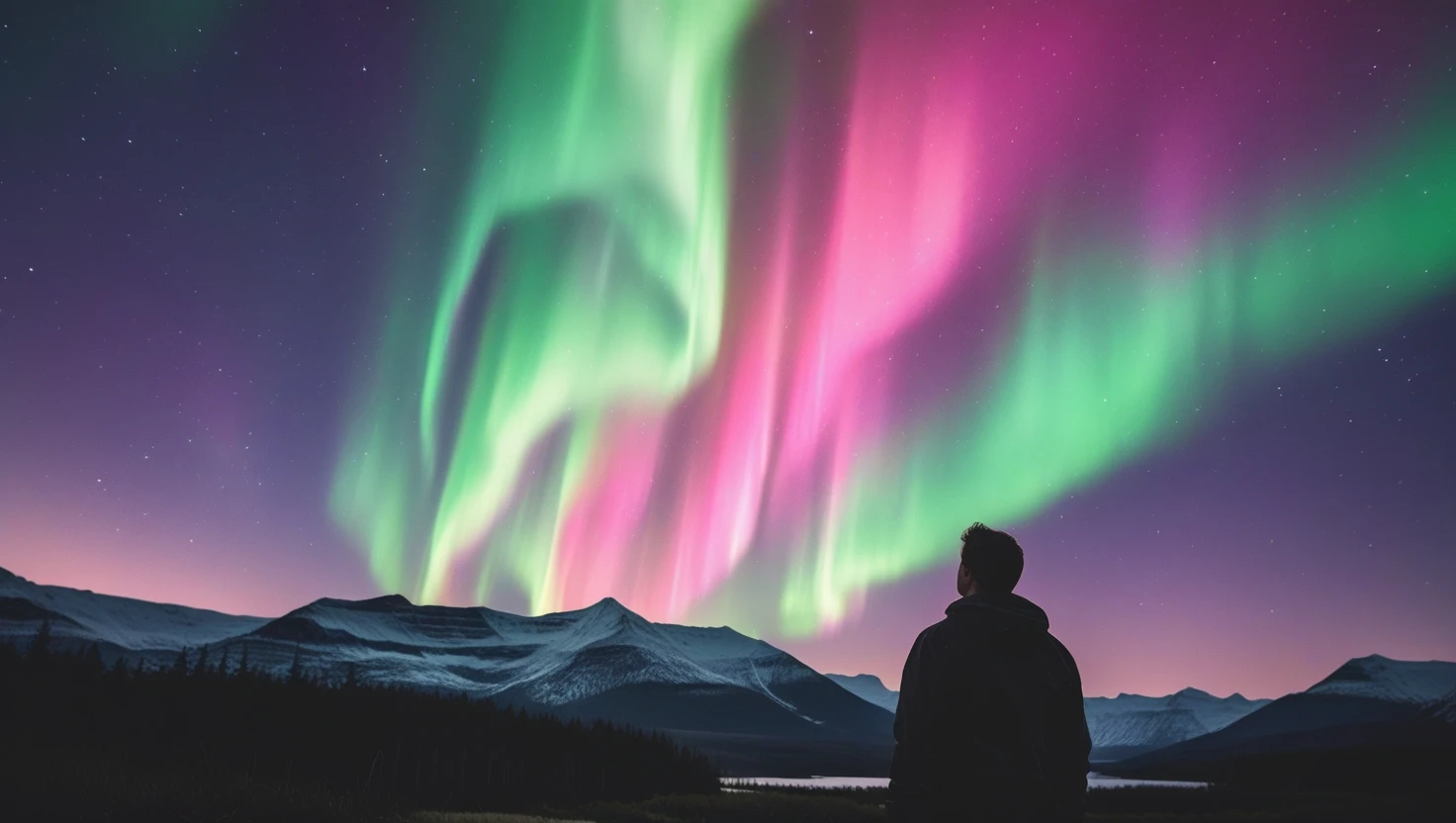
What Is the Aurora Borealis?
The Aurora Borealis, or Northern Lights, is a natural light display that occurs when charged particles from the sun interact with Earth’s magnetic field and atmosphere. These interactions cause beautiful colors—green, pink, red, yellow, blue, and violet—to dance across the night sky, typically near the polar regions.
The Science Behind the Lights
The sun constantly emits a stream of charged particles known as the solar wind. Occasionally, the sun releases massive bursts of these particles in events called coronal mass ejections (CMEs). When these high-energy particles reach Earth, they can cause disturbances in our planet’s magnetic field, known as geomagnetic storms. During such storms, the particles collide with gases like oxygen and nitrogen in Earth’s atmosphere, exciting them and causing them to emit light—this is what we see as an aurora.
Recent Geomagnetic Storms and Their Impact
On May 31, 2025, a significant geomagnetic storm, classified as a G4 (severe) on the NOAA scale, impacted Earth. This storm was triggered by a CME that erupted from the sun, sending a high-speed burst of solar particles toward our planet. The storm led to auroras being visible much farther south than usual, with sightings reported as far south as Alabama and northern California in the United States.
Such events are not just visual spectacles; they can have practical implications. Geomagnetic storms can disrupt power grids, affect satellite operations, interfere with GPS systems, and impact radio communications. However, it’s important to note that these storms do not pose a direct threat to human health.(The Economic Times)
A Spectacle from Space
NASA astronaut Nichole Ayers recently captured a breathtaking video of the Northern Lights from space while aboard the International Space Station. The footage showcases the aurora’s vivid greens, blues, purples, reds, and oranges as seen from above Earth, offering a unique perspective on this natural phenomenon.
When and Where to See Auroras
Auroras are typically visible in high-latitude regions near the Arctic and Antarctic Circles. However, during strong geomagnetic storms, they can be seen at much lower latitudes. To catch a glimpse of the aurora, it’s best to be in a dark area away from city lights, with a clear view of the northern or southern horizon, depending on your location.
In India, auroras are extremely rare due to its low latitude. However, during exceptionally strong geomagnetic storms, there have been rare reports of auroral sightings in the northernmost parts of the country. For most people, traveling to higher latitudes or viewing photographs and videos captured by others are the best ways to experience this phenomenon.
The Importance of Monitoring Solar Activity
Understanding and monitoring solar activity is crucial for mitigating the effects of geomagnetic storms on our technology-dependent society. Organizations like NASA and NOAA continuously observe the sun’s behavior to provide early warnings of solar storms. This allows for timely precautions to protect satellites, power grids, and communication systems.
Sources:
- NOAA Space Weather Prediction Center: G4 (Severe) Geomagnetic Storm Watch(NOAA Space Weather Prediction Center)
- The Washington Post: Solar storm could bring auroras as far south as Alabama on Sunday(The Washington Post)