
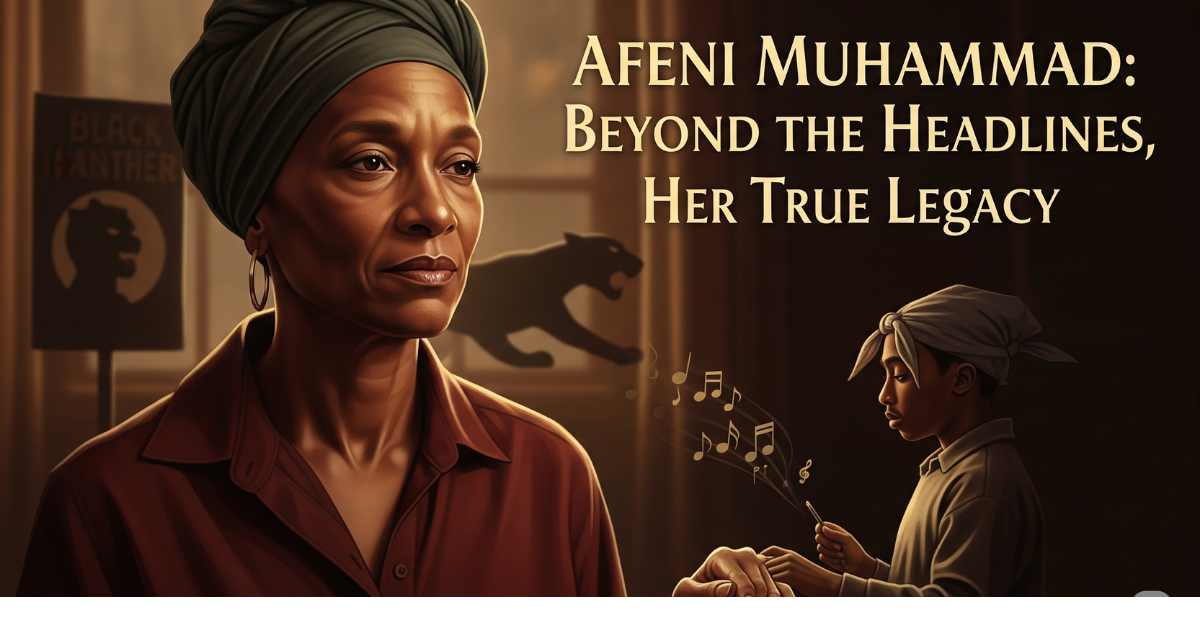
Recent headlines have once again thrust Afeni Shakur, known earlier in her life as Afeni Muhammad, into the spotlight with sensational claims regarding the tragic death of her son, Tupac Shakur. While these new allegations aim to stir controversy, they risk overshadowing the remarkable and profoundly impactful life of a woman who was a formidable revolutionary, a dedicated mother, and a tireless preserver of her son’s artistic and social vision. This article delves into the true legacy of Afeni Muhammad, contextualizing the recent noise within the powerful narrative of her life as an activist and cultural matriarch.
From Alice Faye Williams to Afeni Shakur: Roots of a Revolutionary
Born Alice Faye Williams in Lumberton, North Carolina, Afeni’s early life in the South laid the groundwork for her unyielding pursuit of justice. Her journey took her to New York, where, in the vibrant and volatile landscape of the late 1960s, she found her calling. In 1968, a pivotal decision marked a profound shift in her identity and purpose: she joined the burgeoning Black Panther Party. It was then that Alice Faye Williams embraced the name Afeni Shakur, a name that would become synonymous with strength, resilience, and unwavering commitment to liberation. Within the Panthers, she quickly rose through the ranks, contributing to the party’s newsletter, the “Panther Post,” and proving herself a sharp intellect and an effective organizer.
The Panther 21 Trial: A Pregnant Activist’s Fight for Justice
Afeni’s dedication to the Black Panther Party put her squarely in the crosshairs of the state. In April 1969, she, along with twenty other Panthers, was arrested and charged with a staggering 156 counts of “conspiracy” to bomb police stations and public places in New York City. This became known as the “Panther 21” trial, a landmark case that exposed the concerted efforts by authorities to dismantle the Black Panther movement.
Facing a potential sentence of hundreds of years, a pregnant Afeni made a courageous and audacious choice: she chose to represent herself in court. With no formal legal training, she meticulously researched, cross-examined witnesses, and eloquently argued her case. Her sharp intellect and unshakeable resolve were instrumental in exposing the inconsistencies and provocations of government infiltrators. After an arduous eight-month trial, Afeni and her co-defendants were acquitted on all charges in May 1971, a stunning victory that resonated far beyond the courtroom and cemented her place as a powerful figure in the fight for civil rights. Just a month later, on June 16, 1971, she gave birth to her son, Lesane Parish Crooks, who would later be renamed Tupac Amaru Shakur.
Motherhood, Music, and Preserving a Son’s Vision
Afeni’s life was inextricably linked with her son, Tupac, a bond famously immortalized in his song “Dear Mama.” Their relationship, though complex and at times challenging, was rooted in deep love and a shared commitment to social change. After Tupac’s tragic death in 1996, Afeni faced an unimaginable loss, but she channeled her grief into a monumental endeavor: preserving his unparalleled artistic and social legacy.
She established Amaru Entertainment, a holding company for Tupac’s unreleased material, ensuring his work continued to reach millions. More profoundly, she founded the Tupac Amaru Shakur Foundation (TASF) in 1997. Originally focused on providing quality arts training for young people through programs like “Performing Arts Day Camps” and scholarships, TASF has evolved to address mental health and trauma within the community, using creative arts as a gateway to wellness. Afeni’s dedication ensured that Tupac’s vision for a better world continued to thrive through educational and artistic initiatives.
Addressing the Latest Allegations: Context and Counter-Narratives
Recently, claims by Suge Knight have resurfaced, alleging Afeni’s involvement in ending Tupac’s life after his 1996 shooting. While these statements have generated sensational headlines, it is crucial to place them within the broader context of Afeni’s life and the ongoing complexities surrounding Tupac’s unsolved murder. These claims, made decades after the event, lack independent corroboration and stand in stark contrast to Afeni’s unwavering dedication to her son’s life and legacy, which she fought fiercely to protect and honor until her own passing in 2016. Her entire life was a testament to survival, resilience, and fighting for those she loved, making these recent allegations inconsistent with her known character and actions.
Afeni Muhammad’s journey—from Alice Faye Williams, the determined young woman, to Afeni Shakur, the Black Panther icon who defended herself in court while pregnant, to the grieving mother who transformed personal tragedy into a foundation for artistic and community empowerment—is a testament to an indomitable spirit. Her legacy is not defined by fleeting controversies but by a lifetime of activism, an unwavering pursuit of justice, and a profound commitment to her son’s enduring impact. She was a revolutionary in every sense of the word, and her story continues to inspire.
find daily trending topics and trending news of USA at Usahottopics.com https://www.usahottopics.com
Resources for Fact-Checking:
- [Hyperlink to a reliable source about Afeni Shakur’s life/biography]
- [Hyperlink to a reliable source about the Black Panther Party and Panther 21 trial]
- [Hyperlink to a reliable source about the Tupac Amaru Shakur Foundation]
- [Hyperlink to a reliable source discussing the recent Suge Knight claims with a balanced perspective]