
Introduction:us
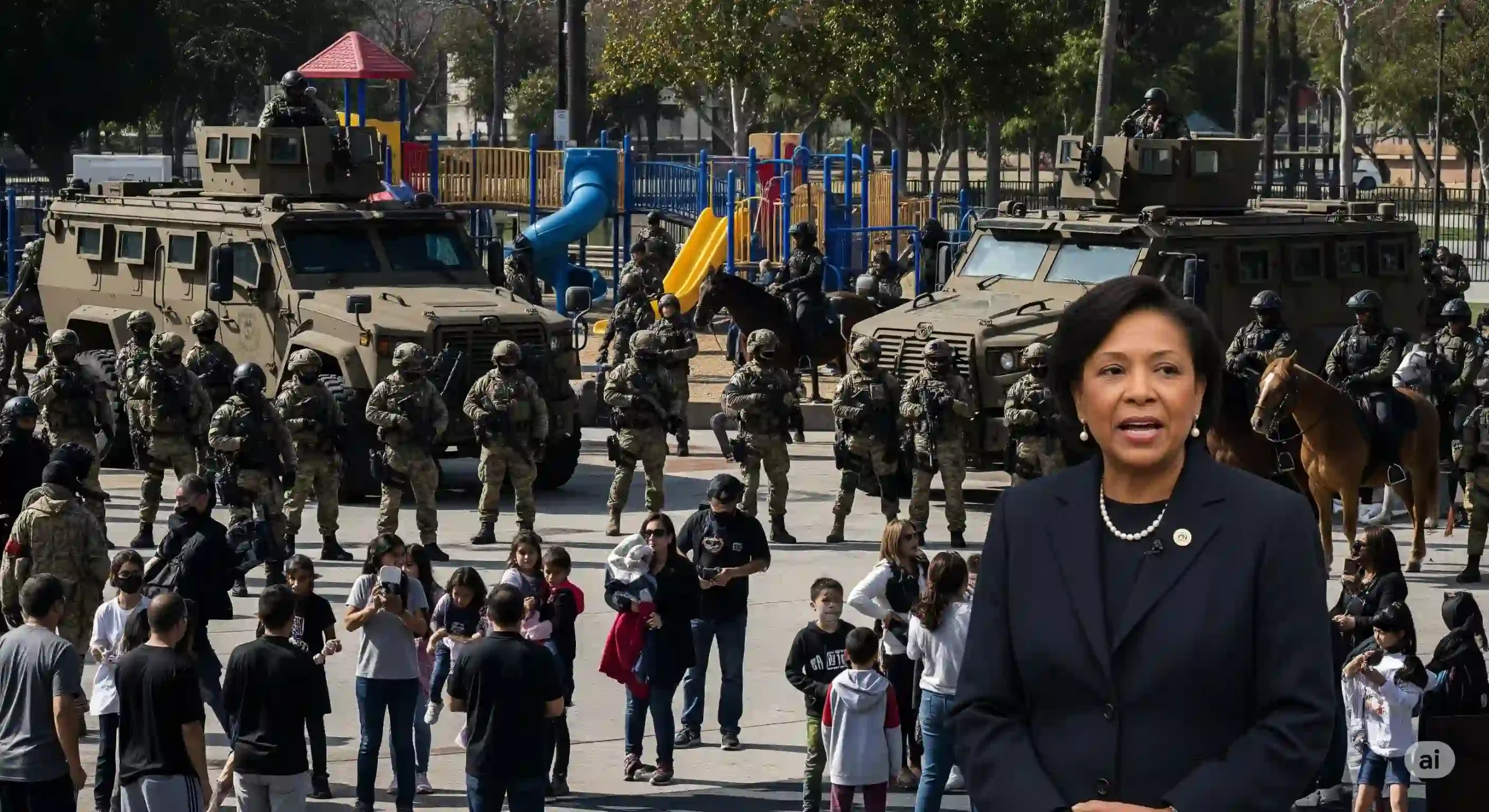
The images from MacArthur Park on Monday, July 7, 2025, were stark: federal agents in tactical gear, armored vehicles, and even officers on horseback fanning out across a vibrant public space in Los Angeles. What quickly unfolded was a dramatic show of force, met with immediate condemnation from Mayor Karen Bass, who decried it as a “political stunt” and an “armed occupation.” This incident, while centered in Los Angeles, is more than a local controversy; it carries profound implications for immigrant communities and civil liberties across the entire United States, raising urgent questions about federal power, community safety, and the future of immigration enforcement.
The MacArthur Park Operation: A Deeper Look at What Unfolded
The operation saw dozens of federal officers, supported by approximately 90 members of the California National Guard, descend upon MacArthur Park. Eyewitnesses reported a convoy of Humvees, tactical vehicles, and ambulances. Yet, despite the intimidating presence and military-style deployment, no arrests were publicly confirmed. Federal authorities, including the Department of Homeland Security (DHS), have offered little in the way of explanation, citing “ongoing enforcement operations.”
MacArthur Park, located in the Westlake district, is far more than just green space; it’s a vital cultural and economic heart for Los Angeles’s diverse immigrant population, often referred to as the “Ellis Island of the West Coast.” This area is home to countless families, small businesses, and community organizations, making the deployment of armed personnel in such a public, civilian space particularly jarring. The absence of arrests, coupled with the heavy-handed approach, strongly suggests the primary intent was not direct enforcement but rather a message of intimidation.
Local Outcry, National Implications: Bass’s Stand & Beyond
Mayor Karen Bass was quick to arrive on the scene, visibly shaken and vocal in her outrage. She condemned the operation as “outrageous and un-American,” describing a chaotic scene where children attending a day camp were rushed indoors, and an 8-year-old boy expressed fear of ICE agents. Bass’s strong stance reflects a growing tension between federal immigration policies and the values of “sanctuary cities” like Los Angeles, which prioritize fostering trust between local law enforcement and immigrant communities.
This incident at MacArthur Park directly ignites broader “Civil Liberties Concerns.” The deployment of what appeared to be military forces in a civilian area, especially one with a vulnerable population, raises alarm bells about the erosion of fundamental rights. Civil rights organizations and legal experts nationwide are echoing Bass’s concerns, highlighting how such tactics can create a pervasive climate of fear, deterring individuals from seeking essential services, reporting crimes, or participating in civic life. It’s a stark reminder that even without arrests, the psychological impact of such operations can be deeply damaging to community cohesion and public trust.
The Legal Grey Area: National Guard, Federal Power & Community Rights
The involvement of the “National Guard Deployment US” in what appears to be an immigration enforcement action immediately brings into question the intricate legal framework governing military involvement in domestic affairs. Statutes like the Posse Comitatus Act generally prohibit the use of federal military personnel for civilian law enforcement purposes, with specific exceptions often related to insurrections or national emergencies.10 While defense officials claimed the Guard’s role was primarily to protect immigration officers, the sheer scale and visual impact of the deployment blurred the lines between military support and direct law enforcement.
This situation fuels the ongoing debate about “Federal Overreach.” Many argue that the current administration is pushing the boundaries of executive power by deploying federal assets in ways typically avoided by past presidents, particularly in cities that have adopted sanctuary policies. Legal challenges are already being mounted against these tactics, with arguments centering on whether such operations constitute unlawful intimidation, violate constitutional rights, or are simply a political spectacle designed to sow fear rather than achieve legitimate law enforcement objectives. The outcomes of these legal battles will set crucial precedents for how federal power can be exercised in American communities moving forward.
Community Resilience & The Path Forward: Protecting Rights Nationwide
In the immediate aftermath, the “Community Response LA” has been one of both shock and resilience. Activists, legal aid workers, and community members quickly mobilized to document the events, offer support, and reinforce “Know Your Rights” information for residents. This local response highlights a broader national movement among immigrant advocates to educate and empower communities facing increased immigration enforcement.
As a nation, the MacArthur Park incident compels us to confront critical questions about how we balance national security, border control, and the fundamental civil liberties of all residents. The path forward requires a re-evaluation of current immigration enforcement strategies, prioritizing approaches that uphold human dignity and legal due process. It also necessitates robust advocacy and community engagement to ensure that the rights of immigrant communities are protected, and that public spaces remain truly public, free from the shadow of military-style deployments. The fear instilled in MacArthur Park serves as a potent reminder of the ongoing struggle for freedom and equitable treatment for all in the United States.
Find daily trending topics and trending news of USA at https://usahottopics.com